Bartosz Miszkiewicz

Bartosz Miszkiewicz

Independent advisor to business owners

When a business starts to grind, I find the real source of the problem.

I spent years building and running companies of my own — I understand being accountable for results, people and risk. I come in from outside, separate symptom from cause, help the owner make the right decision and turn it into a change the organisation can actually carry out.

Diagnosis Decision Change Verification

16 years as a business owner A company built from zero to ca. PLN 40m in annual revenue A team of several dozen people

When to call me in

The bigger the company, the fewer people see a problem from the owner's perspective.

A manager answers for their area, a specialist for their function, a vendor for their solution. The owner has to see the whole: results, people, risk and the consequences of decisions. I come in when a problem keeps returning and there is no single answer inside the company as to why.

01The problem is back, and again it looks like a people problem.

It is easy to conclude that one employee or manager is failing. The cause often sits deeper: responsibilities overlap, information gets lost, and the way work is organised forces errors.

02The company is growing, but you are still the bottleneck.

Decisions, exceptions and problems keep returning to you. Managers execute tasks but do not take ownership of results.

03Every department tells a different version of the same problem.

Sales, operations and finance each see a different cause. You need someone from outside who puts those versions together into one picture and tells you straight what it shows.

04The company has grown faster than the way it is run.

What worked with ten people stops working with thirty. Knowledge stays in heads, responsibilities blur, and the owner starts covering the gaps with their own time.

05The company has worked for years, but the market has changed faster than the way you sell.

What built sales for years — relationships, salespeople, referrals and knowing the market — may no longer be enough. Customers search, compare and decide differently now. I help you look from the outside at the offer, the sales, the brand and how visible the company is to a customer — and then work out what is genuinely missing.

06Before a major decision, you need a second pair of eyes.

An investment, a change of model, a project prepared by another team. Someone from outside to assess it from the perspective of the whole company — before it commits money and time.

How I work

First we establish what decision really has to be made. Then I check what needs to change.

I start with the owner: what needs to change, what must not break in the process, and how we will know it worked. Only then do I go into the data, the processes and conversations with the team.

01

The owner's perspective

We establish the problem, the expected result, the constraints and the decisions that cannot be delegated.

02

Reality check

I talk to people and check how the work actually flows. I look at where responsibilities overlap, where information gets lost, and where the owner's picture diverges from daily practice.

03

What really has to change

I name the real cause and point to the change likely to produce the largest effect at a sensible cost and risk.

04

Change design

I define the way of working, responsibilities, metrics and the tools required. A system or automation appears only when it is part of the answer.

05

Implementation and verification

I make sure the decision does not end as a slide deck. We check the effect in real work and correct the solution based on data.

Selected engagements

I add the most value where the problem does not fit a ready-made template.

01

An outside diagnosis of the company before deciding its next direction

My role: conversations with the owner, independent diagnosis and recommendations
Status: diagnosis and recommendations complete; the owner chooses the next steps

Context

A company with a long history and a stable business. The owner felt the current model was starting to limit further growth, and many key decisions still came back to him.

Problem

The conversation started with an idea: raise the company's visibility and modernise how it works. After a few hours it turned out the problem was wider. The team was absorbed in day-to-day work, salespeople spent much of their time resolving problems, and the direction for further growth existed mostly in the owner's head. The company worked — it just had no room to keep running the current model and design its next version at the same time.

What I did

Based on conversations with the owner and an outside review, I prepared an analysis of the company: positioning, online visibility, the consistency of its communication and offer — including how easily a customer understands what the company sells — and the areas of the organisation that could hold back change. I also looked at the company through the eyes of today's customer: how easily it can be found and understood, its credibility judged, and the next step towards a purchase taken. The goal was not to write the strategy for the owner, but to show the company from a perspective that cannot be seen from inside the daily operation.

Confronting perspectives

At the next meeting the company's key people joined the conversation. Setting the owner's picture against how the team saw the situation brought out opinions and problems that had not been said out loud before. 'Who is not delivering?' turned into 'does the current way of working allow the company to realise the direction the owner has in mind at all?'.

Conclusion

The problem did not come down to one person or one department. The ambition for change was bigger than the organisation's capacity to carry it out, so strategy, priorities and responsibility for change kept returning to the owner. The next step was not to work harder — the owner had to decide what model of the company to build next, and who should get real responsibility and room to carry the change through.

Outcome

The owner received an independent picture of the company, the areas requiring decisions and specific recommendations. Some conclusions were accepted immediately; others became the subject of further discussion with the team. In this engagement the diagnosis itself was the deliverable. The company can implement the recommendations on its own, with me, or with another partner.

02

Process diagnosis in a seven-person customer service team

My role: diagnosis and solution design
Status: system design based on the diagnosis

Context

A seven-person customer service team in a company outside logistics. Automation was under consideration.

Problem

The team could not keep up with assembling documents and sending them to clients. Documents were scattered across inboxes and the process relied on manual searching and chasing.

Diagnosis

The analysis identified the potential to free up the equivalent of two to three full-time roles simply by organising the workflow and making scattered documents visible, before any automation at all.

Conclusion

The greatest value was created before any system was designed. The company saw the real cause of the problem and could decide based on economics rather than the initial assumption.

03

Regaining control of a scattered freight operation

My role: system design and build
Status: in production, used daily

Context

Dozens of wagons and containers in transit from Europe to Kazakhstan at any one time — five countries, over 5,000 km by rail. Every shipment carries its own set of documents, from SMGS waybills to invoices, and all of them arrive by email from different senders.

Problem

Statuses, deadlines and documents were spread between inboxes and spreadsheets. Retyping data consumed around half a full-time role and was the only place where the truth about a shipment was created, which made it the only place where errors were created too. Nobody could answer where a given container was, and what it was missing, on the spot.

Operations tracking

One system, three modules. Wagons, containers, position along the route, deadlines and documents in one place. Status follows from dates, so it cannot be left un-updated.

Documents and communication

Email is read automatically and documents are matched to shipments by container or wagon number; uncertain cases go to a human decision. The client receives a daily message covering only what changed.

Settlements

Rates, margins and invoice notes are calculated from operational data, with each cost invoice paired to the sales invoice for the same shipment.

Outcome

Handling one shipment fell from fifteen minutes or more, sometimes considerably more, to a few. Document flow takes a dozen or so minutes a day. Transcription errors disappeared because the transcription did. Every settlement line can be traced back to its source document.

How I work with owners

I work directly with the owner. I go into the organisation when a problem needs to be understood, perspectives need to be confronted, a decision has to be made or a specific change carried out. We can work as a single diagnosis, a defined project or ongoing sparring with the owner — in each case we agree the goal, the scope and the moment we assess the result.

Standing partner to the owner

Standing support from an experienced owner on company decisions, organisational changes and projects the owner does not want to run solely from the perspective of their own team.

Problem diagnosis and a recommended course of action

A short, focused engagement that ends with the source of the problem named, options laid out and a clear recommendation.

Independent review before an investment or change

An assessment of a concept, a vendor proposal, an implementation plan or a project prepared by another team. The owner gets the risks and a clear recommendation before committing money and time.

Leading a specific change

Designing the way of working, responsibilities, metrics and tools, and overseeing delivery from the business side — through to a verified effect in real work.

Experience

I ran companies first. Advising others came later.

I have worked in international logistics since 2000 and have run my own companies since 2010. I have been accountable for operations, sales, finance, people and technology. One of those companies I built from zero to around PLN 40 million in annual revenue, with a team of several dozen people and sales built largely online.

I know the owner's perspective: growth, risk, accountability and hard decisions. So I do not look at a problem through the lens of a single specialism. I look at the whole company and the economics of the decision, without being attached to the way things are done today.

My experience is not limited to growth. I also know the owner's overload, hard changes and the decisions that cannot be delegated. So I do not propose solutions that are convenient for an advisor — I look for changes the owner and the organisation can actually sustain.

  • 26 years in logistics, 16 as a business owner
  • A company built from zero to ca. PLN 40m annual revenue
  • Leading a team of several dozen people
  • Systems and automations in daily operational use
  • International and intermodal logistics, China–Europe trade

Selected sources: Rzeczpospolita — interview • BIZNES24 — TV conversation • ‘Business in China’ — a book by Radosław Pyffel

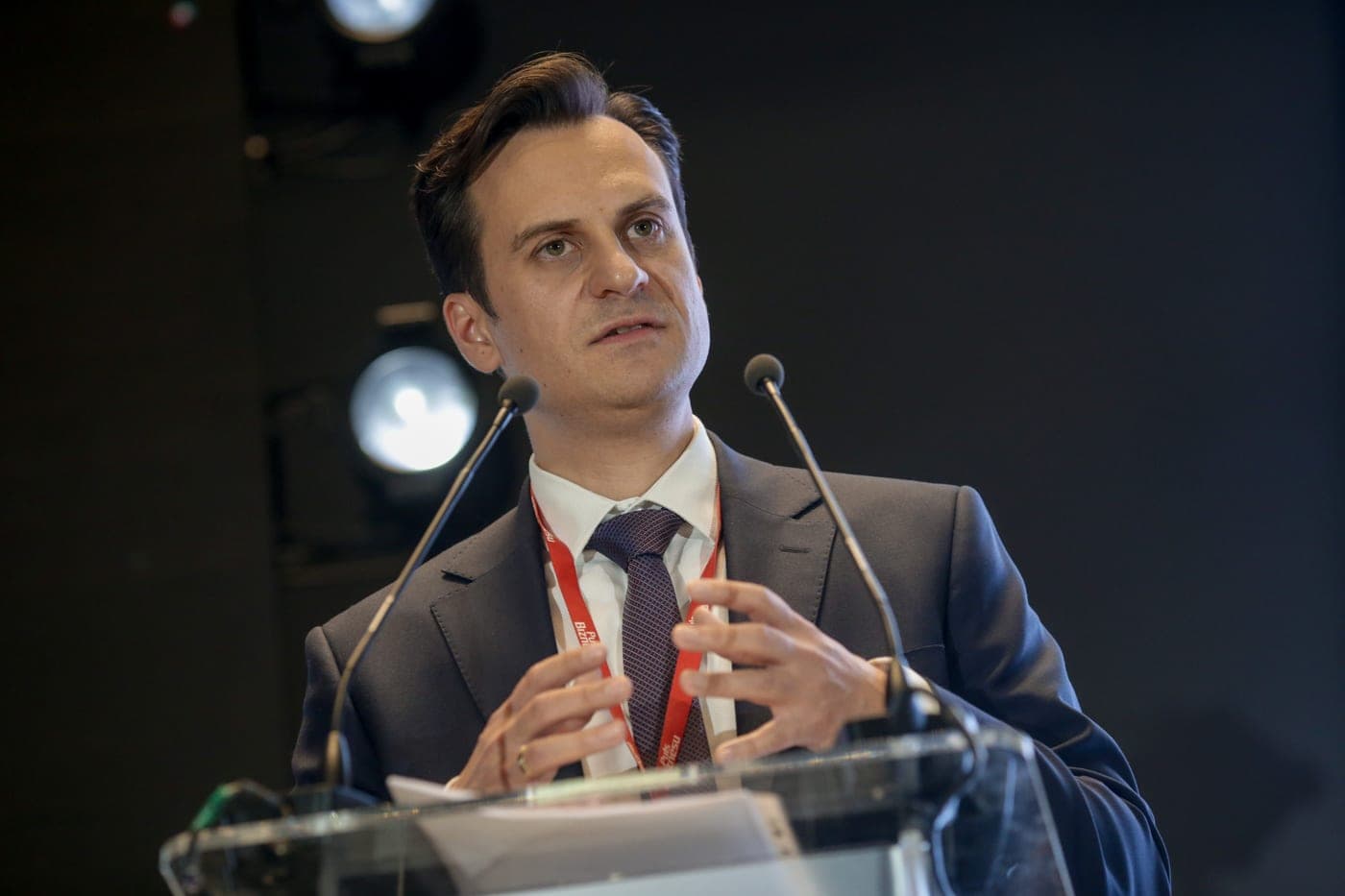
Bartosz Miszkiewicz speaking at a business conference

19th Polish Logistics Managers Forum, Warsaw

Owner mentoring

For entrepreneurs building a company who don't have to figure everything out alone.

I spent years learning to run a company through my own decisions — good ones, bad ones, and the kind whose consequences you only understand later.

Today I pass part of that experience on to entrepreneurs going through the stages I remember well. They have a working business, their first people and growing responsibility, and with that growth come problems that knowledge of the product or sales alone does not solve.

This is not a training course or a ready-made programme. We work on specific situations from your company and on the decisions in front of you. I share my own experience, challenge your assumptions and say plainly where I see a risk — or something you may not be taking into account yet.

In mentoring I do not come into your company as an advisor and I do not run a project for you. We work on your decisions and on the situations an owner has to face.

It may make sense if:

The company is growing and decisions appear that you never had to make before.

Not long ago you did most things yourself. Now there are people, managers and responsibilities to hand over — and the consequences of those decisions only show up months later.

More and more important decisions are made without anyone to truly test them with.

Employees, partners and family each see the situation from their own perspective. Sometimes you need a conversation with someone who has carried responsibility for a company of their own.

You want to make your own decisions — but not every one of them alone.

You are not looking for ready-made answers or someone to run the company for you. You want to test your own thinking against the experience of someone who has faced similar problems before.

You bring the topic.

One month it may be your first manager and the question of how much responsibility to really hand over. Another — a big client, cash, a partner whose role is no longer clear, or the decision whether to keep growing in the current model.

There is no module-by-module programme. We work on what is actually happening in your company at the time.

How it works

We work one on one for three months.

We meet twice a month for 60–75 minutes. Between meetings you can write to me with a short question or a decision you want to test.

At the start I get to know your business, the way it operates and its main challenges. Then we work on the specific situations that come up in the company.

After three months we assess together whether continuing still adds value.

I run at most three of these relationships at a time.

Technology

Business sense first. Then the tool.

Since 2023 I have been testing automation and AI on real processes — in my own companies and in the organisations I work with. I do not sell technology as a goal. I bring it in when it improves results, control or scale, and when the organisation can genuinely use it. I am equally ready to stop an implementation that has no business case. With development teams I work as the translator between business and code — making sure what gets built is what the company actually needs, not what is easiest to build.

Working principles

I do not join a company as an extra pair of hands. I come in as the owner's independent partner.

I do not confirm assumptions for the sake of peace. I say plainly where I see risk, error or an unused opportunity.

I do not design change the company cannot implement, sustain and economically justify.

First we name the problem and the expected result together. Only then do we establish what really has to change — responsibilities, the way of working or the tools.

Contact

Tell me about the decision in front of you, or the problem that keeps coming back.

You don't need a ready brief. Describe the situation, its impact and what you have tried so far. The first conversation is about checking whether I can add real value, not about selling a package. If the problem simply needs a good contractor, I will say so.

Prefer email?

LinkedIn ↗